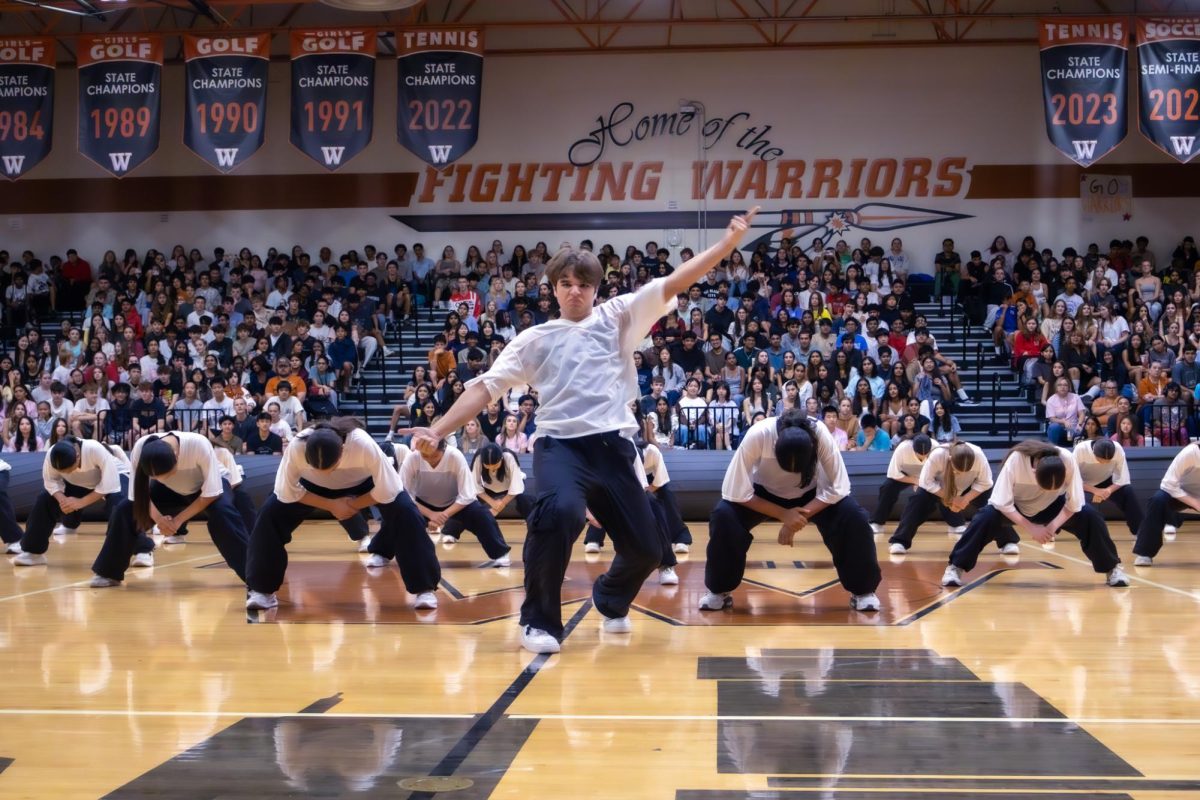
-
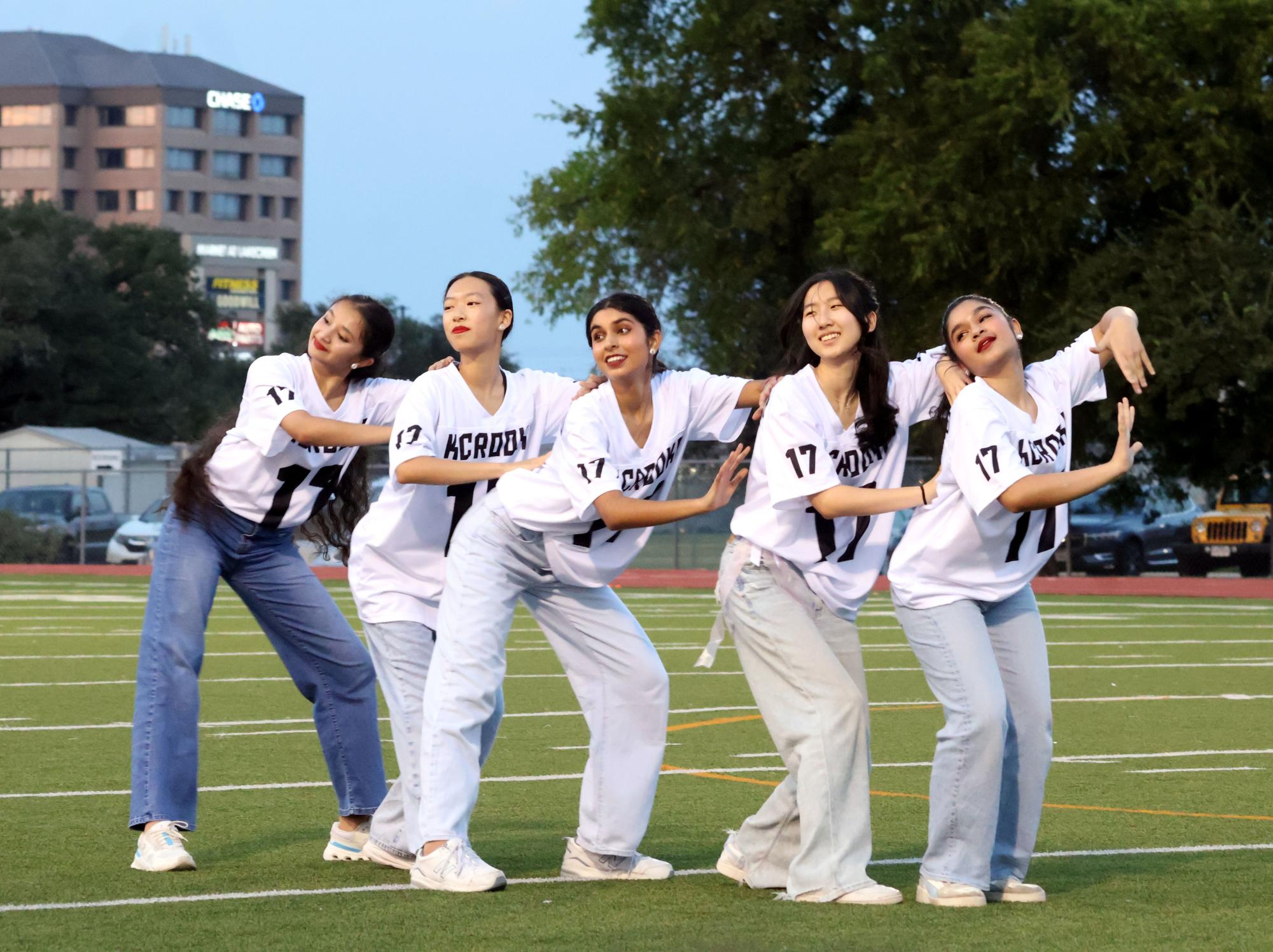
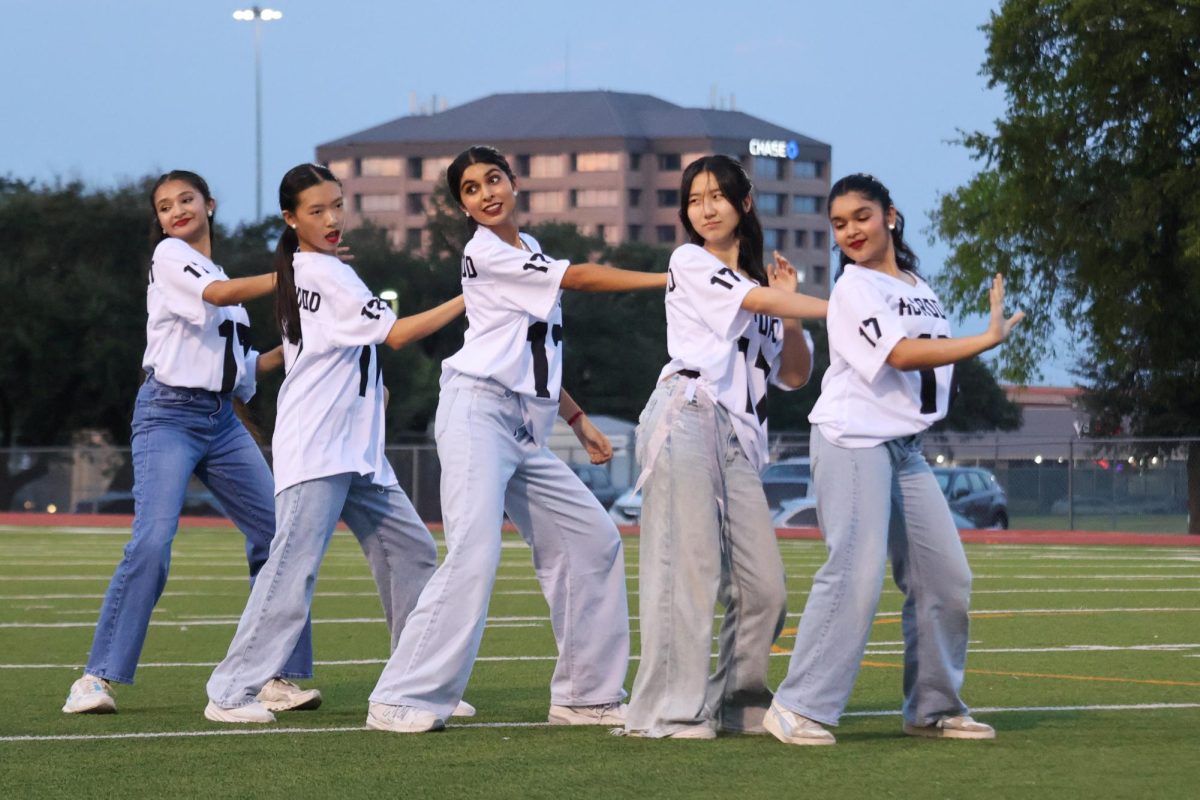
Energy high, Sanjitha Girish ’27, Anandi Raj ’27, Bella Wen ’28, Diane Kim ’28, and Siya Majumdar ’27 flaunts school spirit at the Homecoming Pep Rally on Wednesday, Sept. 17. Eager to show off dance mashups from popular K-pop songs, the members put on a passionate performance for the crowd.
-
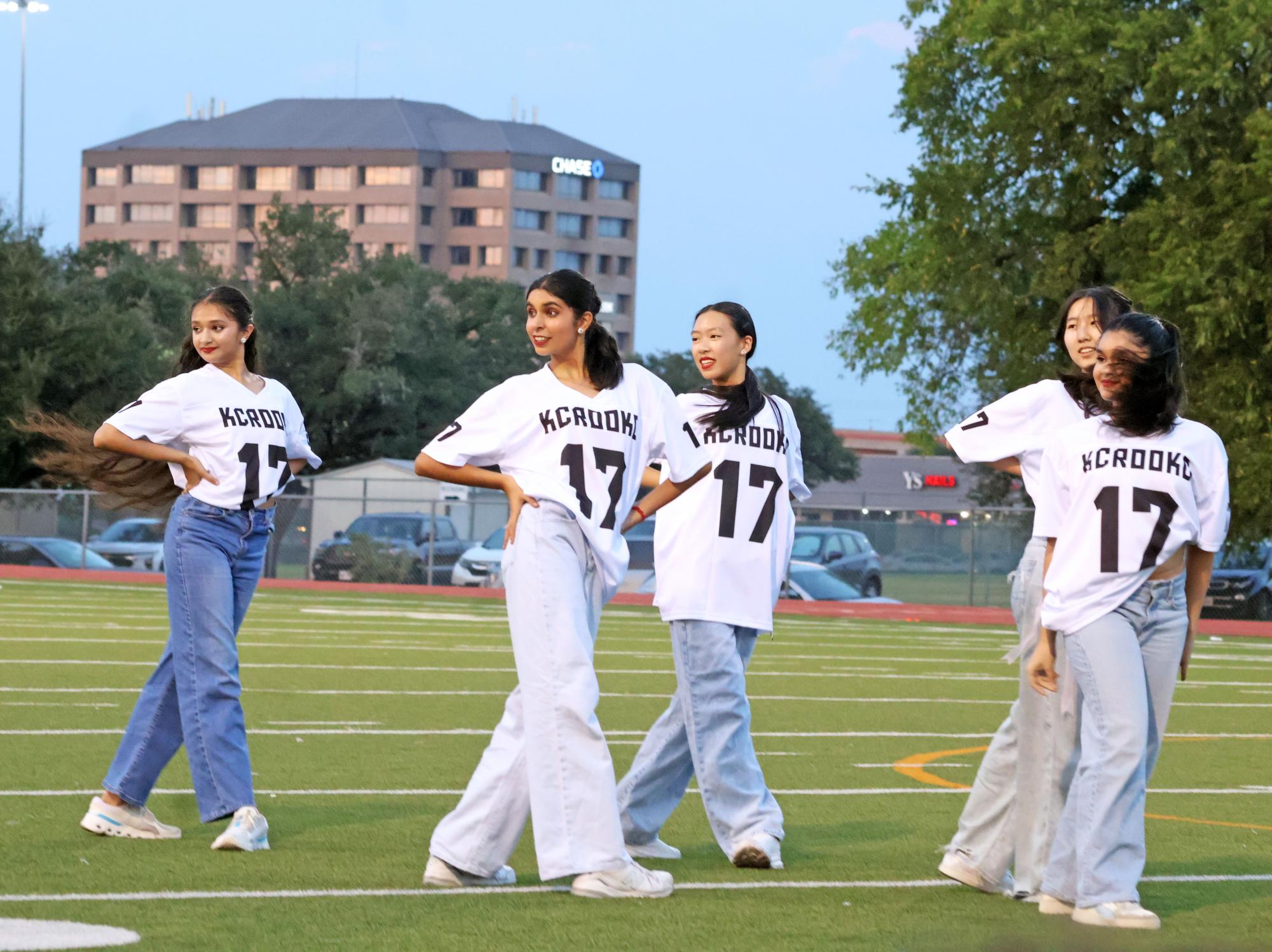
Showing off matching KCROOKD jerseys, K-Pop Club dancers Diane Kim ’28, Anandi Raj ’27, and Bella Wen ’28 beam at the audience. The group performed a mashup of ‘jellyous’ by ILLIT, ‘ANTIFRAGILE’ by LE SSERAFIM, and ‘Gnarly’ by KATSEYE at the Homecoming Pep Rally.
-
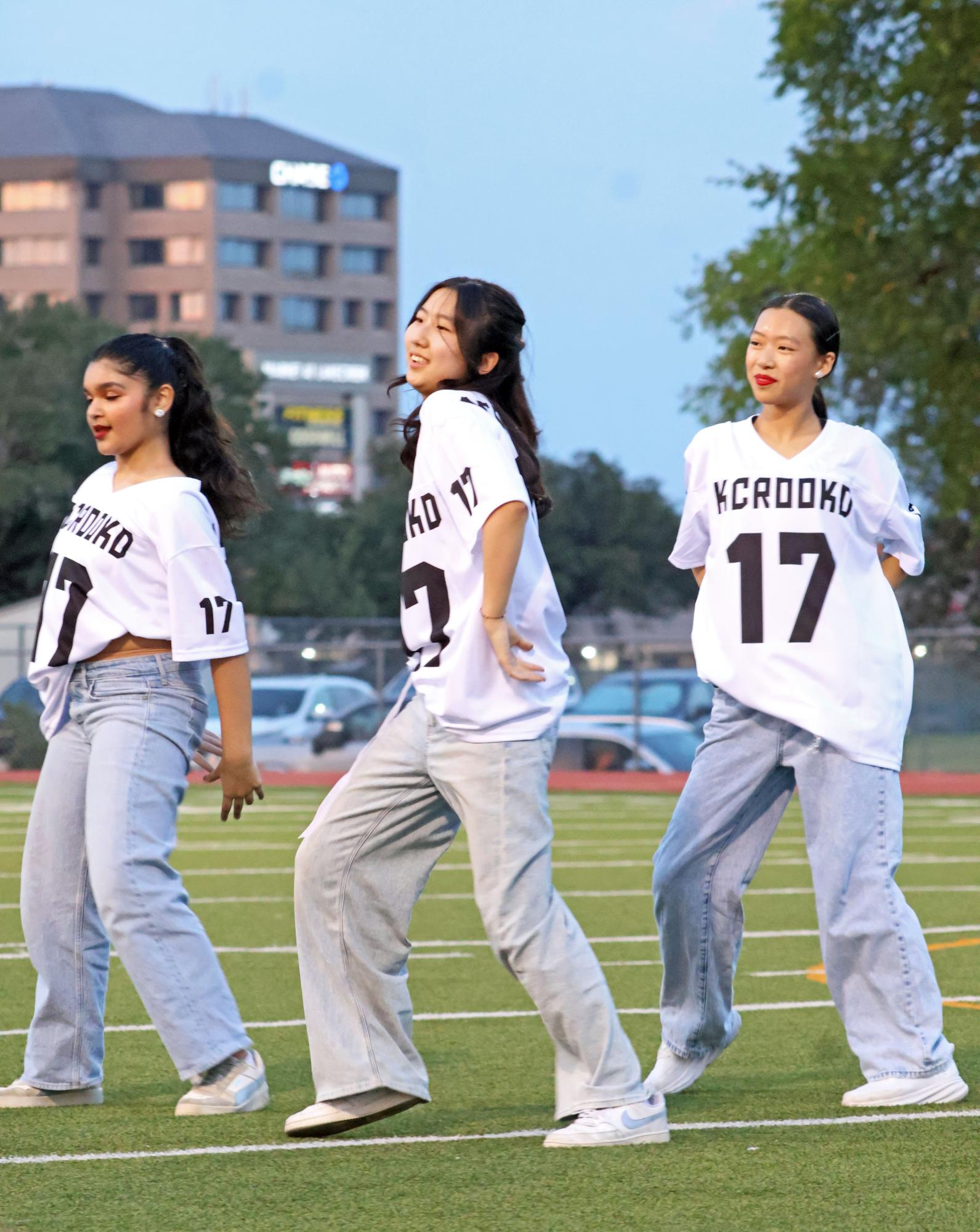
Posing for the audience, K-Pop Club displays their dance skills, bringing high energy and cultural flair to the pep rally. Their performance closed out the event on a high note, leaving the crowd energized and cheering.
The crowd roared across the field as speakers burst to life with jellyous by ILLIT on Wednesday, Sept. 17 at the Homecoming Pep Rally. Lilting voices singing “Boy, you make me jellyous…” in unison drifted into the evening air as the K-Pop Club snapped into formation, each move sharp and synchronized. For a moment, the event felt less like a school performance and more like a Seoul stage as an American high school rite collided with global pop culture.
For the dancers, the spotlight was more than entertainment — it was a statement. Taking the field meant proving K-pop belonged in the school’s tradition. Their choreography was an opportunity to bring the vibrant mix of style, energy, and artistry into the heart of Homecoming, letting audience members depart from misconceptions and witness the pride driving the music.
“[Our performance] led people to appreciate K-pop more, because I feel like some people that aren’t familiar with K-pop have a very biased view,” Siya Majumdar ’27 said. “Our performance really showed the different types of K-pop there is.”
The club’s musical mashup of jellyous by ILLIT, ANTIFRAGILE by LE SSERAFIM, and Gnarly by KATSEYE captured K-pop’s energy and global appeal while still attracting an audience that may be unfamiliar with the genre. K-pop is often dismissed as a fad, yet to the members, it represents passion and pride. Performing the cultural fusion of music and fashion on the field showed classmates K-pop is worth celebrating.
“It’s important [to have a K-Pop Club] to highlight all sorts of genres,” Diane Kim ‘28 said. “K-Pop Club is looked down upon when it’s really a fun club.”
The performance symbolized continued evolution of Westwood traditions. Once defined by football cheers and marching bands, pep rallies now regularly feature K-Pop Club, whose energetic routines have become a school staple. By finding their niche, K-Pop Club represents how global culture and American traditions coexist and enrich each other.
“I wanted [the crowd] to be more familiar with [the] K-pop style,” Majumdar said. “Appreciating this form of music and seeing how we can hype up the audience [was what it meant to perform at Homecoming to me].”
For many audience members, it was their first time seeing K-pop live. The performance proved that music and movement can bridge cultures, reminding the school that Homecoming consists of both tradition and growth.
“I have a lot of friends in Cheer, Warrior Pride, and SunDancers, but they don’t really know anything about [K-pop],” Kim said, “It’s so cool to see them become hype and hype us up.”
![Intensely concentrated, seniors Ari June, Christine Kim, and Sahana Suryanarayan collectively paint a portrait of Charli XCX's face. While painting, they shared stories about past experiences and bonded over similar interests in music. "I've definitely grown as a collaborator because in NAHS [National Art Honor Society], you're all growing together as artists and collaborators," Suryanarayan said. "The portrait helped me make room for others while painting."](jpg/edit_2025-09-02_nahsmeeting_sophiacortes-4-1200x800.jpg)