
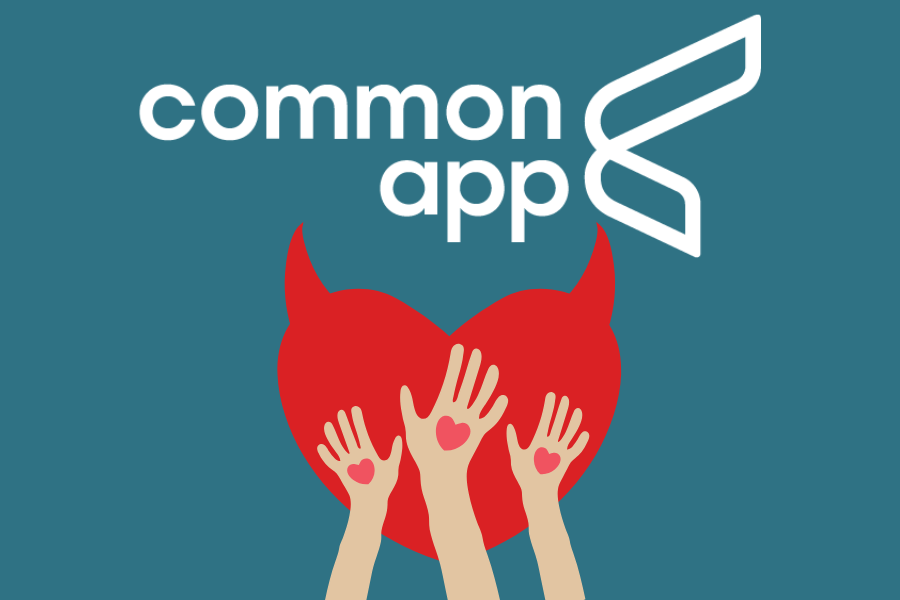
You are scrolling through Instagram reels and stumble onto a video that catches your eye. The caption reads: “Comment ‘passion project’ for a full list of projects guaranteed to get you into the Ivy League!” The irony is impossible to miss: a “passion” project you can order from a menu, delivered straight to your messages like a takeout order.
This is the world of fake altruism created by the academically intense high school environments, where genuine care has been replaced by calculated moves in the college admissions game. At Westwood, the culture of performative service has reached epidemic proportions, turning what should be meaningful engagement into hollow resume padding.
Walk through the halls during Fishbowl, and you’ll witness this frenzy firsthand. Students sprint between tables, signing their names on as many interest sheets as possible. The goal isn’t participation, it is accumulation. More clubs equal more lines on Common Application, or so the thinking goes. Whether those clubs actually matter to the student is secondary, if a concern at all.
The nonprofit industrial complex amongst students at Westwood reveals the most disturbing aspect of this trend. Students launch organizations with lofty mission statements about “combating climate change” or “spreading awareness about mental health.” They post a single time about their “initiative,” maybe lazily make a logo, and then let the initiative die a quiet death. The nonprofit exists only on paper and in college applications; it is a ghost company designed to impress the admissions officers who have seen this trick countless times before.
Leadership positions have become another commodity to be collected rather than responsibilities to fulfill. Students run for officer positions in clubs they barely attend, seeking titles they’re unqualified to hold. Club elections devolve into popularity contests where promises are made but never intended to be kept. The title itself matters more than the service behind it. Leadership, once about contribution and accountability, devolves to yet another empty achievement.
This phenomenon occurs all across the nation, but is especially prominent at Westwood. At a school lauded for its academic rigor and cutthroat academic environment, with countless students in Advanced Placement (AP) and International Baccalaureate (IB) classes, high average test scores, and tens of students attending top universities, the pressure to get into college at any cost is astoundingly high. Yet, the benefits of these students getting into colleges do not outweigh the costs. Although the end result of this pseudo-altruism is often favorable for students, it sets a bad precedent, and greenlights problematic behavior.
Perhaps the most troubling result of this culture is how it corrupts genuinely good actions. Students organize charity drives not because they care about the cause, but because the title of “community service coordinator” looks impressive on college applications. They tutor underprivileged kids not out of desire to help, but because it demonstrates “leadership in education.” The action itself might be positive, but the motivation transforms it into something hollow. Ultimately, students are left doing good things for the wrong reasons, resulting in any potentially societally beneficial behavior being watered down, due to a lack of genuine desire to motivate change.
This behavior is not just hypocrisy; it is a fundamental misunderstanding of what ‘altruism’ means. When the primary goal is personal advancement rather than helping others, even objectively good deeds become tainted. The beneficiaries become props in someone else’s college admissions story. And the service becomes a transaction: I help you, you help me with the application.
This performative culture can be seen at Westwood, damaging everyone it touches in profound and lasting ways. Students lose connection to their authentic interest, becoming so focused on strategic positioning that they forget what genuine passion feels like. They develop what psychologists call “achievement addiction“一a compulsive need to accumulate accomplishments that never satisfy because they’re disconnected from real values.
The psychological consequences run deeper than simple dissatisfaction. When students spend years crafting false personas, they often struggle to distinguish between their authentic selves and their manufactured college application identity. This identity confusion doesn’t magically resolve upon graduation, it follows them into college and beyond, creating adults who are perpetually seeking external validation rather than internal fulfillment.
Especially at Westwood, this constant performance creates chronic anxiety and burnout. Students find themselves trapped in commitments they never truly wanted, surrounded by activities that drain rather than energize them. They become experts at saying the right words about causes they don’t understand, attending meetings for organizations whose missions they’ve forgotten, and maintaining facades that require increasing amounts of mental energy to sustain. Westwood is an incredibly competitive school, and students spend hours of time juggling school, standardized tests, various extracurriculars, as well as their complex family and social life. This environment is already intense, and disingenuous extracurriculars only add to students’ already heavy mental burdens.
Meanwhile, genuine causes suffer immeasurably from this epidemic of performative altruism. Real nonprofits struggle for attention and resources while well-connected students with superior marketing skills dominate the narrative. At a school where many are fortunate enough to have access to financial resources and support, students are able to prop up these disingenuous programs with ease, while genuine causes struggle. Established organizations that have been quietly doing crucial work for decades find themselves competing with flashy student-led initiatives that promise revolutionary change but deliver only social media posts.
The impact on vulnerable communities is particularly devastating. Food banks, homeless shelters, and tutoring programs become revolving doors of uncommitted volunteers who appear for photo opportunities and disappear the moment college applications are submitted. The constant turnover creates more work for already overstretched staff, who must repeatedly train new volunteers only to watch them vanish without notice.
These communities often receive scattered, inconsistent efforts that create more problems than solutions. A “mental health awareness” campaign that consists of a single assembly presentation does nothing to address the complex needs of students struggling with depression and anxiety. A “literacy initiative” that provides books but no sustained reading support may actually highlight educational inequalities without offering meaningful solutions.
The superficial nature of these efforts often causes real harm by oversimplifying complex social issues. Students launch campaigns to “end homelessness” with bake sales and car washes, inadvertently spreading the message that systemic problems can be solved through individual charitable acts. This not only fails to address root causes but can actually impede more effective advocacy efforts by making the problems seem more manageable than they actually are.
These seemingly altruistic causes that ultimately never create any societal good are symptomatic of broader societal issues amongst teenagers and all those applying to colleges. They contribute to a growing apathy about charitable work and social activism that extends far beyond high school. When performative altruism becomes the norm, it breeds skepticism about all charitable efforts. Adults who witness the parade of empty student initiatives become jaded about youth activism in general, dismissing even genuine efforts as resume padding. This cynicism creates barriers for the minority of students who are truly passionate about social change, making it harder for them to find mentors, funding, and support. The culture also undermines democratic participation by treating civic engagement as a performance rather than a responsibility. Students learn that involvement in their community is something they do for personal gain rather than genuine concern for collective welfare. This transactional view of citizenship creates adults who are less likely to vote, volunteer, or engage in the messy but essential work of democratic governance. Furthermore, fake altruism contributes to the growing inequality in access to “impressive” opportunities. Wealthy students have the resources to launch professional-looking nonprofits and travel for volunteer opportunities, while their less privileged peers cannot compete with these manufactured achievements. This widens the gap in college admissions and perpetuates cycles of inequality that genuine service work should be helping to address.
But this culture didn’t emerge from nowhere. High schools and universities have created this monster by incentivizing quantity over quality in the admissions process. Applications reward the student who can rattle off a laundry list of superficial commitments more than the one who pours real effort into fewer, meaningful pursuits. By asking for activity lists rather than deep reflections, the system encourages strategic positioning over sincerity. The solution requires fundamental changes in how we evaluate and reward service. Instead of counting hours or listing organizations, we should focus on sustained impact. We should teach students that real leadership comes from commitment, not titles, and that authentic passion cannot be manufactured or ordered from an Instagram comment section.
Passion: noun, an intense desire or enthusiasm for something. By definition, passion cannot be manufactured or ordered from an Instagram comment section, yet here we are treating genuine enthusiasm like a commodity to be purchased or displayed.






Vedanti Patil • Sep 15, 2025 at 5:33 pm
say it louder for the people in the back!! such a well-written article 🤩